If you spend most days at a work from home desk, you can feel the hours in your hips and shoulders by midafternoon. I remember the first winter I went fully remote. By January, the chair had molded to me, not in a good way. My wrists tingled, my back tightened, and my focus seemed to fray earlier every day. Adding a WFH standing desk didn’t turn me into a superhero, but it changed the way my body and brain felt at 3 p.m. Instead of sliding into a slump, I had another gear.
Most people think a standing desk means standing all day. That’s a myth. The real win comes from movement and options. A well set up adjustable desk for home office use lets you switch postures quickly, match your work to your body’s signals, and reduce the small aches that interrupt deep work. The shift is subtle and steady. Fewer micro pains, fewer distractions, better stamina.
What actually improves when you sit less
The biggest benefits come from lowering the cumulative load on your joints and improving circulation. Sitting for long periods places your hips in a constant flexed position, which tightens the hip flexors and flattens your natural lumbar curve. Your neck cranes to meet the screen. Blood moves sluggishly through compressed tissue. Stand for blocks of time and you reverse those angles. Hips extend, calves engage as small stabilizers, and your spine stacks more easily.
The cognitive uptick is real too, even if it’s not dramatic. Standing doesn’t make you smarter, it just reduces the low-grade physical friction that drains mental energy. On days when I alternate every 30 to 45 minutes, I’m more willing to tackle a thorny email at four o’clock. On days I forget and sit from morning until lunch, I find myself negotiating with the snooze button of my attention.
If you’re hoping for big caloric burn, temper expectations. The difference between sitting and standing might net an extra 10 to 20 calories per hour, sometimes more if you shift and fidget. Over a full day, that adds up a little. More importantly, small frequent movement supports metabolic health and keeps stiffness at bay.
Choosing the right desk for your space and work
The best desk for working from home is the one you will actually use through a full day without hating your setup by Friday. That means matching the desk to your space constraints, your tasks, and your willingness to tweak.
If you’re tight on square footage, a compact home office desk with a smaller footprint, say 36 to 42 inches wide, can still accommodate a laptop, a monitor on a slim arm, and a notepad. I’ve set up a small work from home desk in a studio apartment by keeping only the essentials on the surface and moving everything else to a narrow shelf mounted above. The fewer items on the desk, the more smoothly you’ll shift between sitting and standing.
For a shared space or multipurpose room, a foldable WFH desk has real appeal. I used one for a year in a guest room, folded it on weekends so the space felt like a bedroom again, and set it up Monday morning in two minutes. Stability matters, though. Some lightweight folding frames wobble at full height. If you type hard, look for a model with cross bracing or a lever lock that eliminates shake.
A minimalist WFH desk can be a quiet productivity boost. Clean lines, open space, nothing competing for your eye. I’ve seen people polish their routines just by removing desk clutter, not changing any apps. Minimalist doesn’t mean spartan; it means intentional. One plant, one lamp, no cable spaghetti.
If ergonomics are your priority, an ergonomic desk for home use should support monitor arms, keyboard trays, and cable management. The top should feel solid under your forearms, and the lift mechanism should allow fine height increments, not just coarse steps. I’ve tested desks that jump in big leaps. You spend your day between two slightly wrong heights. It sounds small, but after a week your shoulders will tell you otherwise.
Electric, crank, or converter: how to think about mechanisms
Electric standing desks are the default recommendation, and for good reason. They move smoothly with a button press, often save two to four heights in memory, and handle heavy loads. A quality motor can move at around 1.2 to 1.6 inches per second. That speed matters more than you think. If it takes 15 seconds to adjust, you’ll change less often than if it takes six. Over months, that’s the difference between consistent use and a novelty that sits at one height forever.
Crank desks trade convenience for reliability. No motor means less to break and usually lower cost. If your power outlets are limited, or you want simplicity, a crank can serve well. Just know you’ll be less inclined to adjust for short blocks. People tend to change height before a long writing session, not a quick call.
Desk converters sit on top of an existing work from home desk and lift your keyboard and monitor. They’re a compromise that can be smart if you love your current desk or if you rent and don’t want a full frame. The pitfalls are depth and stability. Some converters push your keyboard closer to you, which can crowd your forearms. Others bounce slightly when you type. In a pinch they work, but if you stand often, a full frame feels cleaner and more stable.
Size, height range, and load capacity: don’t overlook the numbers
Check the height range against your body, not just the spec sheet. For most people between roughly 5'2" and 6'2", a good desk with a 22 to 48 inch range will work seated and standing. If you’re taller, look for desks that rise to 50 inches or more or plan on a thicker desk mat that adds an inch under your feet. Shorter users may benefit from a desk that goes down to 21 inches or an adjustable chair with a footrest.
Load capacity tends to get inflated in marketing. A desk rated for 150 to 220 pounds is usually enough for a desktop tower, dual monitors, speakers, and still room to spare. What matters more is how that weight feels in motion. Low quality frames flex when lifting a heavy load, which can misalign your monitor arm. A good test in the showroom or at home is to raise the desk while resting one hand lightly on the surface to feel vibration. You want a smooth rise, minimal sway.
Surface size should reflect your real workflow. If you draw or spread papers often, a 60 by 30 inch top gives you elbow room. If you mostly type and use a single monitor, 48 by 24 inches might be plenty. Corners matter. Softly rounded front edges reduce pressure on forearms. It’s a small thing you notice at hour five.
Dialing in true ergonomics at home
You can buy the best frame and still feel lousy if your setup ignores angles and distances. Here’s the checklist I give clients when we adjust a new WFH standing desk the first day.
- Elbows at roughly 90 degrees when typing, with shoulders relaxed and down, not shrugged. Monitor top at or slightly below eye level, so you look a touch downward at the center of the screen. Screen at a distance where you can read without leaning forward, usually an arm’s length, more if the screen is larger. Wrists neutral, not cocked up on a hard edge. A low-profile keyboard helps. Avoid thick wrist rests that force extension. Feet planted when standing, knees soft, weight shifting from foot to foot every few minutes.
Footwear matters. Barefoot feels great for some, but a supportive shoe or a cushioned mat takes pressure off the heels. I alternate between a firm anti-fatigue mat and my running shoes on hardwood. If your floor is carpeted, the mat should be firm enough not to sink and throw off your posture.
If you experience wrist tingling while standing, check the keyboard angle. Many desks encourage a slight wrist extension because the surface is flat and high. A negative tilt keyboard tray, where the front of the keyboard is slightly lower than the back, can relieve that. It looks odd the first week and then your wrists thank you.
The stand-sit rhythm that actually sticks
I’ve tried every timing rule, from rigid timers to intuitive switching. The pattern that works across most roles is a flexible 30 to 45 minutes standing, 20 to 30 minutes sitting, repeated through the day. The exact numbers matter less than switching before discomfort. If your lower back starts whispering at minute 50, switch at minute 40.
Match posture to task. I stand for quick meetings, brainstorms, and tasks where my energy dips, like administrative forms. I sit for focused writing and any detailed design work that needs a steady mouse hand. On long calls, I walk slowly in place or shift weight. Micro movement keeps you from locking into a stiff stack.
Your first week, plan to stand less than you think. Start with two or three standing blocks a day, no more than 90 minutes total. Add a block each week. If your calves feel tight, dial back. This is not a toughness contest. Your body adapts better to gradual change.
Managing cables, power, and peripherals without the tangle
The one unavoidable friction with a wfh standing desk is movement. Anything that plugs in needs slack. The best fix is thoughtful cable routing on day one.
Run a single power strip on the underside of the desk surface, not on the floor. All devices on the desk plug into that strip. Then one or two long cables drop from the desk to the wall outlet. Attach those drops to the desk leg with clips so they move with the frame. This approach eliminates the common snag where a short monitor cable yanks when you raise the desk.
For laptops, a single USB-C or Thunderbolt dock keeps your setup tidy. You connect one cable and everything wakes up. A monitor arm clears desk space and lets you fine tune height in seconds. If you work with a desktop tower, place it on a small rolling stand. You’ll save your back when you clean and you’ll avoid tugging cables.
Noise and neighbor considerations
Electric desks vary in noise. Quieter frames hum at around 40 to 50 decibels, louder ones whine above 55. If you share a room or work early mornings, the quiet motor is worth the premium. Some desks click loudly at the limits of travel. That might not bother you at noon, but it’s noticeable at 6 a.m.
Floor type changes perceived vibration. On older wood floors, heavy desks can transmit a buzz. A thin rubber pad under the feet of the desk reduces that and protects the finish.
Durability, maintenance, and the warranty trap
Motors wear. Cheap ones wear faster. If you plan to raise and lower multiple times a day for years, look closely at the warranty. A solid manufacturer backs the frame for at least five years, often seven to ten, and covers the motor specifically. A one-year motor warranty is a red flag.
Maintenance is simple. Wipe dust off the legs every month so grit doesn’t grind in the guides. Every six months, check and snug the bolts, especially on a foldable WFH desk or a frame you assembled yourself. A tiny wobble grows over time. Lubrication is rarely needed for modern glides, but if the desk starts squeaking, consult the maker before spraying anything. The wrong lubricant attracts dust and makes it worse.
Realistic budgets and where not to skimp
You can build a capable setup for a few hundred dollars, and you can spend several thousand. The sweet spot for most remote workers sits between 400 and 900 for the frame and top combined. In that range, you get a stable frame, a motor that doesn’t complain, and a popular work from home desks surface that won’t bubble the first time you spill coffee.
Don’t cheap out on the monitor arm or the power delivery. A wobbly arm turns a good desk into a trampoline. A flaky USB-C dock will have you unplugging and replugging daily. Those frustrations steal more time than a slightly slower lift.
If your budget is tight, start with a desk converter on a sturdy minimalist WFH desk you already own, then plan to upgrade. Spend a small amount on a proper mat and a decent external keyboard. The ergonomics of input devices move the needle more than a glossy desktop finish.
The aesthetics people underestimate
A work from home desk sits in your home. You’ll notice how it looks every morning before coffee. I’ve worked with clients who delayed buying a better desk because they feared an industrial vibe in a cozy room. You can find wood finishes that match bookshelves, powder-coated legs in muted tones, and cable trays that hide the chaos. If your setup shares a living room, a clean minimalist WFH desk with a natural wood top softens the presence. You’re more likely to maintain a setup you find attractive.
Lighting changes how you experience the desk. A warm desk lamp placed at the side of your dominant hand reduces glare on the screen and softens the feel of a tech-heavy corner. A small plant breaks up the rectangles and gives your eyes something to land on between tasks. These aren’t superficial touches. They affect how welcome the space feels at 8 p.m. when you need to review a document one last time.
Common mistakes and how to avoid them
I’ve seen the same errors over and over. The desk arrives, it’s assembled in a rush, then used at the wrong height for months. People set the standing height based on how tall they are, not on elbow angle. Or they push the monitor up too high and end up tilting their chin. Another classic is buying a beautiful small work from home desk with no thought for cable slack, then discovering the monitors turn off whenever the desk moves.
The fix is patience on day one. Set aside an hour to dial in heights, save memory positions on an electric frame, and route cables. Mark your mat position with a tiny tape tab so you don’t stand too close or too far each time. If you share the desk with a partner, save both of your heights. Write them down. You’ll forget after a weekend.
How to test a desk before you commit
If you can visit a showroom, wear the shoes you usually wear at home and bring the measurements you care about: elbow height when standing, seated elbow height, and preferred monitor height relative to your eye level. Spend five minutes typing, not just thirty seconds. Listen for noise, feel for wobble at full height, and test the memory presets. Press one and see if it goes directly to the height or creeps and then corrects. That tiny behavior difference matters.
Online only? Read reviews with a skeptical eye. Look for long-term updates and comments about motor failure after a year. Ask the seller for the full height range, the speed, the noise level if they publish it, and the warranty terms. If they can’t answer clearly, move on.
A sample day with a WFH standing desk
On a writing day, I start seated for the first deep work block. After 45 minutes, I raise the desk to my first preset and stand for a quick scan of notes, then outline ideas for the next section. I pace lightly in place while I think. That small movement loosens my back. After another half hour, I drop the desk, refill coffee, and take a five-minute floor stretch by the desk: hip flexor, hamstring, thoracic twist. In the afternoon slump, I stand for a meeting, leave the desk up, and tackle email. If I feel fidgety at 4 p.m., I plug in a 10-minute timer and finish with a standing burst of small tasks.
I don’t treat standing as virtue. Some days my legs ask for more sitting and I listen. The point is not to clock standing hours, it’s to reduce the hours your body spends frozen in one shape.
When a standing desk isn’t enough
If you have persistent pain, a desk helps but doesn’t solve everything. Tight hips or a cranky low back often need strengthening and mobility work. A weekly routine of calf raises, glute bridges, and gentle hip flexor stretches rescues many remote workers. If your symptoms include numbness or sharp pain, talk to a clinician. I’ve had clients adjust their desk perfectly and still struggle until they addressed weak glutes or a stiff thoracic spine.
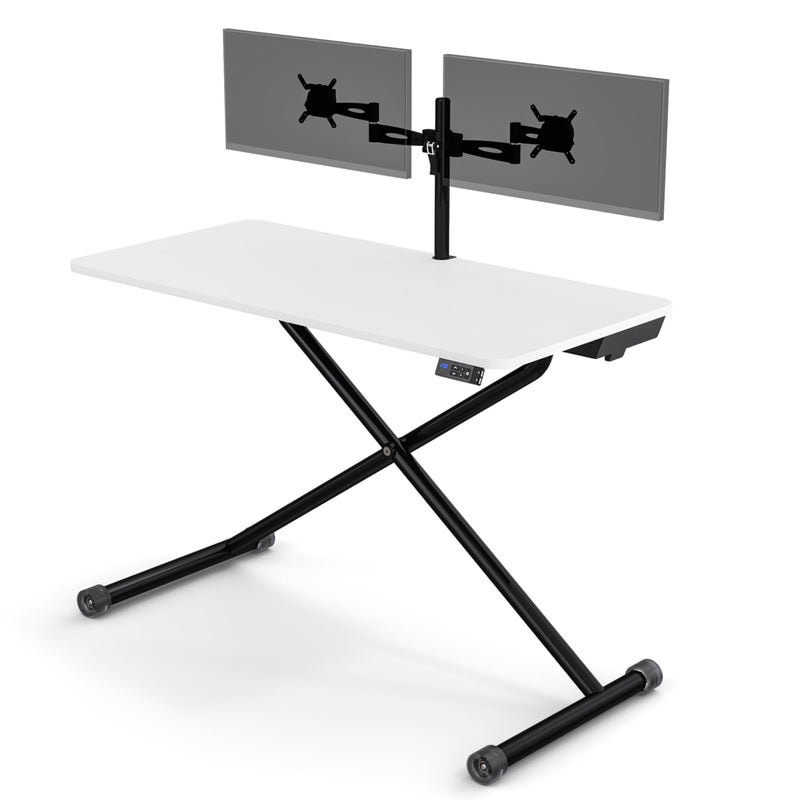
The chair matters as much as the desk. An adjustable seat with a firm cushion, proper lumbar support, and a seat pan that lets your feet plant will make your sit periods restorative rather than harmful. Pairing a quality chair with an adjustable desk for home office use gives you two good options, not a good and a bad one.
The quiet payoff
After the novelty fades, what remains is a smoother workday. Your energy doesn’t crater as hard midafternoon. Your neck doesn’t throb as you close the laptop. You feel less guilty about your posture because you’ve built a setup that nudges you toward movement without nagging. Over months, these small wins compound.
A wfh standing desk is not magic. It’s a tool that supports better habits. Choose a frame that fits your space and budget, set it up with care, pair it with a chair and peripherals that respect your body, and let the rhythm of sit, stand, and move become part of how you work. When you get that right, the desk fades into the background and the work moves to the foreground, exactly where it belongs.
2019
Colin Dowdle was your average 25-year-old living in an apartment with two roommates in the Lincoln Park neighborhood of Chicago.
All three would occasionally work from the apartment. The apartment was a challenging environment for one person to work remotely, adding two or three made it completely unproductive. A few hours of laptop work on a couch or a kitchen counter becomes laborious even for 25 yr olds. Unfortunately, the small bedroom space and social activities in the rest of the apartment made any permanent desk option a non-starter.
Always up for a challenge to solve a problem with creativity and a mechanical mind, Colin set out to find a better way. As soon as he began thinking about it, his entrepreneurial spirit told him that this was a more universal problem. Not only could he solve the problem for him and his friends, but there was enough demand for a solution to create a business.